Latin Language
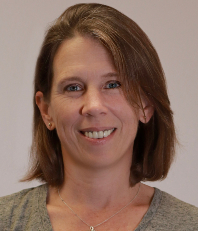 Kourtney Murray
Latin Language Instructor
The study of ancient Latin begins each fall quarter with the first quarter of a year-long grammar sequence: Beginning Latin (LTLA-001), Intermediate Latin I (LTLA-002), and Intermediate Latin II (LTLA-003).
By the end of the first year students will have mastered the basics of ancient Latin grammar and have read selections from some of the major Roman authors, including Ovid, Cicero, and Nepos.
The goal of this sequence is to introduce students to reading ancient Latin. This is accomplished through the careful reading of Latin passages that become gradually more complex as we advance. There is no speaking or listening component.
Latin Courses
Beginning: LTLA-001
Intermediate: LTLA-002 → LTLA-003
Students must be placed into the appropriate course level prior to booking. See the "Placement Exam" details below.
Placement Exam
If you have never studied the language before, book LTLA-001. If you have studied the language before, you may not book LTLA-001 and must contact the Latin Language instructor (above) to discuss the level of Latin appropriate for your continued study of the language.
If you took the AP Latin (Virgil or Literature) test, a score of 3, 4, or 5 will give you credit for LTLA -001, LTLA-002, and LTLA-003. You will be able to book any upper division LTLA courses, typically starting with LTLA-100.
Additional Resources
Course Descriptions
Much of the first quarter is devoted to the mastery of the forms of Latin words. This is necessary because each word in Latin can take on many more spellings than the average English word. By the second quarter, the memorization component decreases and students begin to tackle sentences and paragraphs of greater complexity, so that by the end of the third quarter, the perusal of short texts becomes possible -- a gratifying reward after two terms of dedication to the smaller elements of the language.
Upper Division Courses
Normally students who have completed LTLA-003 next take LTLA-100, typically offered in fall quarters. Completion of LTLA-003, however, is the prerequisite for any upper division Latin course. In addition to LTLA-100, other upper division courses in Latin literature are typically offered during the year. These courses cover the various authors, periods, and genres of the literature of the ancient Romans.
Did you know?
- As much as two-thirds of English words have Latin or Greek roots, and the figure is much higher for scientific vocabulary.
- One eminent British mathematician and philosopher described all of European philosophy as “a series of footnotes to Plato.”