PhD Program Admissions
Updated July 2026
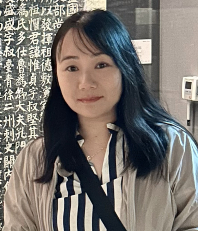
Ping Zhu
Director of Doctoral Studies
Director of Doctoral Studies
The PhD in Literature at UC San Diego is a distinctive program that moves beyond traditional disciplinary boundaries. We foster multilingual, interdisciplinary scholarship and teaching in literary, cultural, and media studies, bringing together a dynamic community committed to these approaches in a global and transmedial context.
Unlike conventional English or Comparative Literature departments, the UC San Diego Literature Department was founded as a department of world literatures and cultures. From the outset, it has been dedicated to multilingual approaches to literary history, critical theory, translation studies, and global cultural analysis. This commitment is reflected in sustained engagement with a wide range of languages, including Chinese, English, French, German, Greek, Hebrew, Japanese, Italian, Korean, Latin, Russian, and Spanish, as well as in the study and practice of writing and translation.
Students design individualized fields of study in close collaboration with faculty mentors, drawing on strengths across literary studies, critical theory, film and media studies, translation studies, and global cultural studies. The program emphasizes rigorous methodological training and intellectual innovation, supporting work that engages literature alongside visual culture, archives, performance, and other media.
Our PhD program has a strong record of training transnational, theoretically engaged scholars and teachers with a commitment to social justice and educational access. Our alumni have gone on to a wide range of careers across the world, including faculty positions at research universities, liberal arts colleges, and community colleges; leadership roles in social and educational policy; and work as writers, editors, and artists.
If you are a creative, intellectually adventurous thinker eager to reimagine the possibilities of literary and cultural studies, we warmly invite you to join our community.
About the Program
Frequently Asked Questions
How many students are admitted each year?
We typically admit 6-7 students from a pool of approximately 100 applicants. You may view the full stats here: Admissions (Grad Data).
How do I know your program is the right one for me?
Overall, this department is a particularly good fit for students hoping to pursue comparative, multilingual, and interdisciplinary approaches to literary and cultural studies. To find out more about how well the program fits your specific research interests, we strongly encourage you to visit our list of Faculty By Areas of Specialization. On this list, you can click on the names of faculty members to learn more about their research interests, publications, and educational background.
In your Statement of Purpose, explain why you see this program as a good fit for your specific interests, and be sure to name which faculty members you hope to work with and why.
If you would like to explore our department metrics, student population data, info on placement after graduation and more, Grad Data has several relevant public reports. You can also view our current students page (PhD Students) and alumni page (PhD Alumni) to see research interests, dissertation topics, and post-graduation updates.
Is there a part-time or online attendance option?
No. This is a full-time study, full residency program. “Full residency” means that you must be physically present on campus September to June to participate in seminars, fulfill teaching duties (if applicable), and attend orientations and training sessions. It is important for prospective students to note that full-time enrollment is a requirement of many financial support options, most commonly 50% Teaching Assistant positions on campus, but also stipends and tuition/fee payments. Half-time study is a quarter-by-quarter exception, which makes students ineligible for most forms of financial support. So, it is only a viable option in a few very specific situations.
Can I visit the campus and talk to a particular professor?
You are always welcome to visit us, but it is best to make meeting arrangements in advance. If you would like to meet with a particular faculty, please contact them directly to arrange a time. Aside from faculty you may want to work with if admitted, you can also consider reaching out to the faculty leaders of our graduate programs (Graduate Program Leadership). Please keep in mind that there may be times when faculty members are not able to meet with prospective students. This is especially true in the summer and any holidays. Please be respectful of the professors' time.
If you would be interested in sitting in on a class meeting, email litgrad@ucsd.edu to request the class schedules for any offered Literature graduate seminars. Then, if a particular class schedule is convenient for you, email the instructor for permission to attend.
For general information about UCSD and San Diego, we recommend the following resources:
- Visitor information and a virtual tour with Office of Admissions Tours
- UC San Diego from the Skies (YouTube)
- City of San Diego Official Website
- UCSD Grad and Family Housing
Can I contact some of your students? I would like to ask them some questions.
Yes, but please be respectful of the students' time and keep in mind that some may not respond (especially during the summer and any holidays). A list of our graduate students and contact information can be found on the Graduate Student Profiles Page. Aside from students who may be researching topics that interest you, you can also consider reaching out to the students of our Literature Graduate Student Committee (Graduate Program Leadership).
Do you accept late applications?
We only admit students once a year, and we do not accept late applications. Be sure that you have submitted your application and paid the application fee by the application deadline. If you will be applying for an application fee waiver, please carefully review the process and timeline details on the Application Guidelines page.
Check your account in UC San Diego Graduate Application Management regularly for missing documents. Plan to apply at least a month before the application deadline to allow enough time to track down delayed or missing documents.
NOTE: If you have completed all other sections of the application and are only waiting on a letter of recommendation and/or a test score, please move forward with submitting your application (as-is) by the deadline. Letters of recommendation and test scores will be added to your application once received, even after the submission deadline. However, since we begin reviewing applications soon after the submission deadline, we cannot guarantee that any late documents will be included in the review of your application. Therefore, we highly recommend that you request these items as early as possible.
What is your policy on deferring admissions?
If you are offered admission to our program and choose not to accept during the current admission cycle, you will not be guaranteed admission in any future cycle. You would need to submit a new application, which would be reviewed with that respective year's pool of applicants.